

-
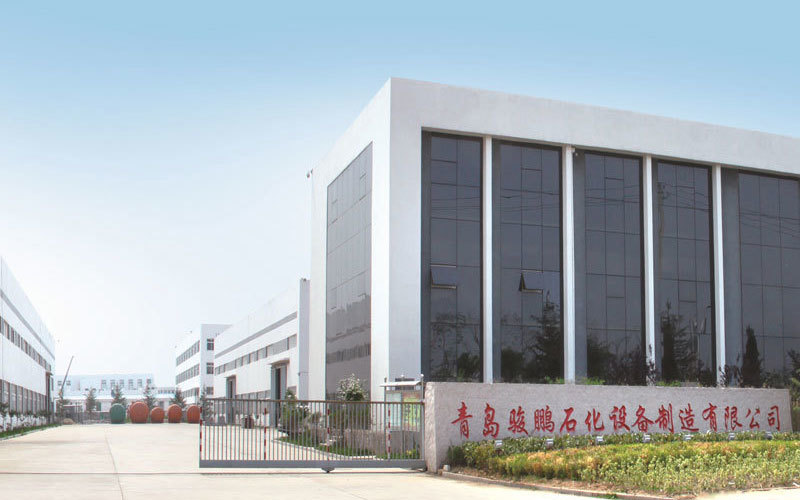
About UsQingdao Junpeng Petrochemical Equipment Manufacturing Co., Ltd. was established on February 10, 2010 with a registered capital of 51 million yuan. It is located in the beautiful tourist city of Qingdao.
-
ProductsQingdao Junpeng Petrochemical Equipment Manufacturing Co., Ltd. was established on February 10, 2010 with a registered capital of 51 million yuan. It is located in the beautiful tourist city of Qingdao.
Blog
Popular Science Knowledge: The Great Harm of Boiler Scaling, Prevention is Key
Published time:
2023-05-05 13:58
Recently, during internal inspections of industrial boilers by inspectors from the city's quality inspection center, scaling was found to varying degrees inside some boilers. Boiler scaling not only affects the safe operation of the boiler but also reduces its thermal efficiency and shortens its service life. The hazards of boiler scaling are as follows:
01. Impact on Safe Operation
The presence of scale increases the temperature of the boiler's heating surface, causing metal overheating and creep, which can lead to metal bulging or even explosions.
02. Reduced Thermal Efficiency
The more severe the boiler scaling, the greater the heat loss and the higher the energy consumption. The thermal conductivity of scale is tens or even hundreds of times lower than that of steel. It is estimated that for every 1 mm increase in boiler scale thickness, fuel consumption increases by about 10%.
03. Shortened Boiler Lifespan
Boiler scaling can cause under-deposit corrosion, reducing the effective thickness of the metal. For compact boilers, once the heating surface is scaled, it is extremely difficult to clean.
Common methods for boiler descaling include chemical cleaning and mechanical descaling. If preventive measures are taken before scale formation, boiler scaling can be prevented. Boiler scaling prevention usually involves the following aspects:
01. Personnel
Water treatment personnel must hold special equipment operation certificates and be proficient in water treatment skills.
02. Equipment
Water treatment equipment should be configured to match the boiler load. If the water treatment capacity is less than the boiler load, improper water treatment, insufficient soft water supply, and excessive boiler feed water hardness will result, leading to boiler scaling.
03. Water Treatment
Water treatment personnel need to regularly conduct water quality testing and record the results. Based on these results, guiding boiler blowdown can effectively prevent or reduce the likelihood of scale formation.
Related News
What is a boiler heating surface?
The heating surface of a boiler generally refers to the metal surface area in contact with flames or flue gases (the other side is in contact with water or heat transfer oil). Heat exchange in a boiler is carried out through such a metal surface area. It is generally measured in square meters (m²). A larger heating surface area means a larger boiler capacity, and vice versa.
Boiler capacity refers to the ability of a steam boiler, hot water boiler, or organic heat carrier boiler to provide thermal energy. A larger capacity means a greater heating capacity and output; conversely, a smaller capacity means a smaller heating capacity and output. For example, a 1t/h steam boiler means that the boiler can convert 1 ton of water into saturated steam at a certain pressure within 1 hour; a 0.7 MW hot water boiler or organic heat carrier boiler means that it can generate heat equivalent to 0.7 MW of power (equivalent to the heat of 1 ton of steam) within 1 hour.
To overcome the numerous existing environmental and other shortcomings of industrial pulverized coal boilers, Junpeng Petrochemical has developed and launched a practical new type of industrial pulverized coal corner tube boiler. This product ensures stable combustion, high combustion efficiency, and reduces ash accumulation on the convective heating surface, achieving the goal of high efficiency, energy saving, and emission reduction. In the current domestic industrial pulverized coal boiler field, it is the first time to use the burner counter-arrangement technology to completely solve the problem of complete combustion, and the heating surface basically does not form slag, ensuring that the flue gas temperature remains within the design range under full load. Qingdao sheet metal processing is very common in the production of mechanical industry, and is an important part of mechanical production, with wide applications in automobiles, aerospace and other fields. It directly determines the appearance of the machine and reflects the maturity of the machine. With the rapid development of the machinery manufacturing industry, the shapes of sheet metal parts are becoming increasingly complex.

Contact Us
Sales Tel: +86-0532-58710666
Sales Tel: +86-13335063629
After-sales Tel: +86-0532-58710332
After-sales Tel: +86-13969678003
Email: qdjp-zh@163.com
Address: Qingdao High-tech Industrial Development Zone, New Materials Group
Copyright © 2025 Qingdao Junpeng Petrochemical Equipment Manufacturing Co., Ltd