

-
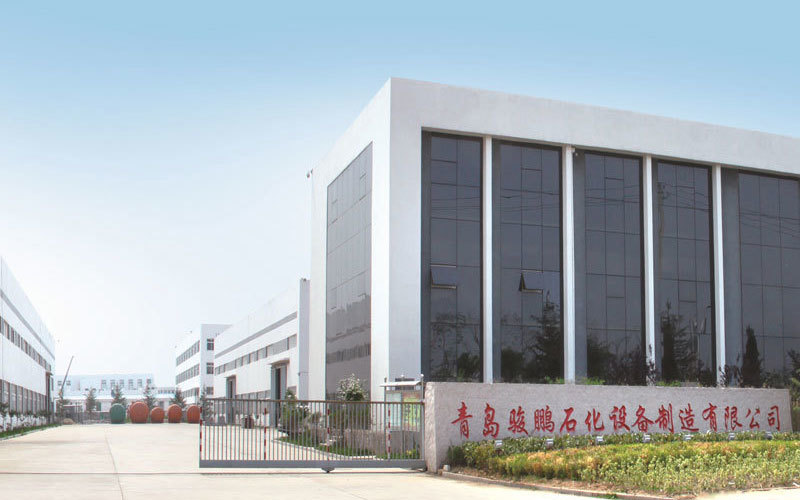
About UsQingdao Junpeng Petrochemical Equipment Manufacturing Co., Ltd. was established on February 10, 2010 with a registered capital of 51 million yuan. It is located in the beautiful tourist city of Qingdao.
-
ProductsQingdao Junpeng Petrochemical Equipment Manufacturing Co., Ltd. was established on February 10, 2010 with a registered capital of 51 million yuan. It is located in the beautiful tourist city of Qingdao.
Blog
Fuel (Gas) Boiler Industry Dynamics: Future Trends and Challenges
Published time:
2025-02-26 00:34
Current Status of the Oil (Gas) Boiler Industry
In recent years, oil (gas) boilers have been increasingly used in industries, especially against the backdrop of continuously rising energy demand. These boilers, with their high efficiency and energy saving features, are gradually becoming the preferred choice for many companies. Many companies are choosing to upgrade their equipment to improve production efficiency; however, the industry also faces various challenges.
Technological Innovation and Energy Conservation and Environmental Protection
With the development of technology, the technology of oil (gas) boilers is also constantly innovating. More and more companies are beginning to adopt intelligent control systems that can monitor the boiler's operating status in real time and optimize fuel use efficiency. In addition, increasingly stringent environmental regulations have forced many companies to consider boiler emissions. By using clean energy and advanced combustion technologies, companies can not only reduce production costs but also achieve environmental goals.
Changes in Market Demand
Changes in market demand are another important factor driving the development of the oil (gas) boiler industry. In recent years, with the acceleration of industrialization and the improvement of urbanization levels, the demand for thermal energy has increased significantly. Especially in industries such as pharmaceuticals and food processing, a stable and efficient heat source has become key to production. In this situation, oil (gas) boilers have been widely welcomed due to their flexible fuel selection and high thermal efficiency.
Future Trends: Intelligence and Sustainable Development
Looking to the future, the oil (gas) boiler industry will move towards intelligence and sustainable development. Many companies are developing new boilers that integrate Internet of Things technology to achieve remote monitoring and fault diagnosis. This intelligent improvement can not only effectively reduce operating costs but also improve safety and reduce the investment in human resources.
Dual Drive of Policy and Market
At the policy level, the government's support for clean energy is continuously increasing. Through tax incentives and subsidies, companies are encouraged to invest in green technologies, promoting the transformation and upgrading of oil (gas) boilers. At the same time, market demand is constantly changing, and consumers' requirements for product environmental protection and energy efficiency are becoming increasingly high, which also forces companies to constantly innovate and adapt to market changes.
Challenges and Opportunities Coexist
Of course, the oil (gas) boiler industry also faces many challenges during its development. Fluctuations in raw material prices and the speed of technological updates can all affect the industry. However, opportunities and challenges often go hand in hand. If companies can keep up with the times and seize market demand, they will be able to remain undefeated in future competition.
Summary
In general, oil (gas) boilers the industry is in a stage of rapid development and transformation. Through technological innovation and policy support, the industry will develop in a more efficient and environmentally friendly direction. Both companies and consumers should pay attention to the dynamics of this field, seize opportunities, and jointly promote the sustainable development of the industry.
Related News
What is a boiler heating surface?
The heating surface of a boiler generally refers to the metal surface area in contact with flames or flue gases (the other side is in contact with water or heat transfer oil). Heat exchange in a boiler is carried out through such a metal surface area. It is generally measured in square meters (m²). A larger heating surface area means a larger boiler capacity, and vice versa.
Boiler capacity refers to the ability of a steam boiler, hot water boiler, or organic heat carrier boiler to provide thermal energy. A larger capacity means a greater heating capacity and output; conversely, a smaller capacity means a smaller heating capacity and output. For example, a 1t/h steam boiler means that the boiler can convert 1 ton of water into saturated steam at a certain pressure within 1 hour; a 0.7 MW hot water boiler or organic heat carrier boiler means that it can generate heat equivalent to 0.7 MW of power (equivalent to the heat of 1 ton of steam) within 1 hour.
To overcome the numerous existing environmental and other shortcomings of industrial pulverized coal boilers, Junpeng Petrochemical has developed and launched a practical new type of industrial pulverized coal corner tube boiler. This product ensures stable combustion, high combustion efficiency, and reduces ash accumulation on the convective heating surface, achieving the goal of high efficiency, energy saving, and emission reduction. In the current domestic industrial pulverized coal boiler field, it is the first time to use the burner counter-arrangement technology to completely solve the problem of complete combustion, and the heating surface basically does not form slag, ensuring that the flue gas temperature remains within the design range under full load. Qingdao sheet metal processing is very common in the production of mechanical industry, and is an important part of mechanical production, with wide applications in automobiles, aerospace and other fields. It directly determines the appearance of the machine and reflects the maturity of the machine. With the rapid development of the machinery manufacturing industry, the shapes of sheet metal parts are becoming increasingly complex.

Contact Us
Sales Tel: +86-0532-58710666
Sales Tel: +86-13335063629
After-sales Tel: +86-0532-58710332
After-sales Tel: +86-13969678003
Email: qdjp-zh@163.com
Address: Qingdao High-tech Industrial Development Zone, New Materials Group
Copyright © 2025 Qingdao Junpeng Petrochemical Equipment Manufacturing Co., Ltd