

-
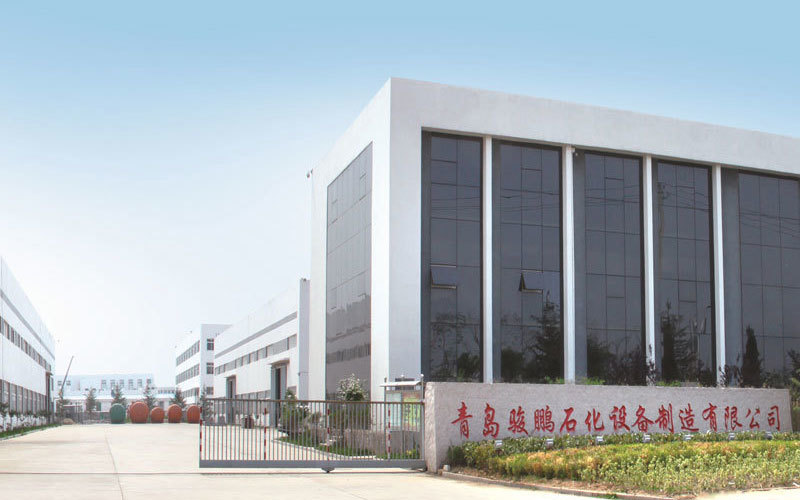
About UsQingdao Junpeng Petrochemical Equipment Manufacturing Co., Ltd. was established on February 10, 2010 with a registered capital of 51 million yuan. It is located in the beautiful tourist city of Qingdao.
-
ProductsQingdao Junpeng Petrochemical Equipment Manufacturing Co., Ltd. was established on February 10, 2010 with a registered capital of 51 million yuan. It is located in the beautiful tourist city of Qingdao.
Blog
Understanding Natural Gas Boilers: 4 Key Points!
Published time:
2023-05-05 14:07
Many friends want to understand natural gas boilers. Actually, four points are enough.
I. Basic Knowledge of Natural Gas Boilers
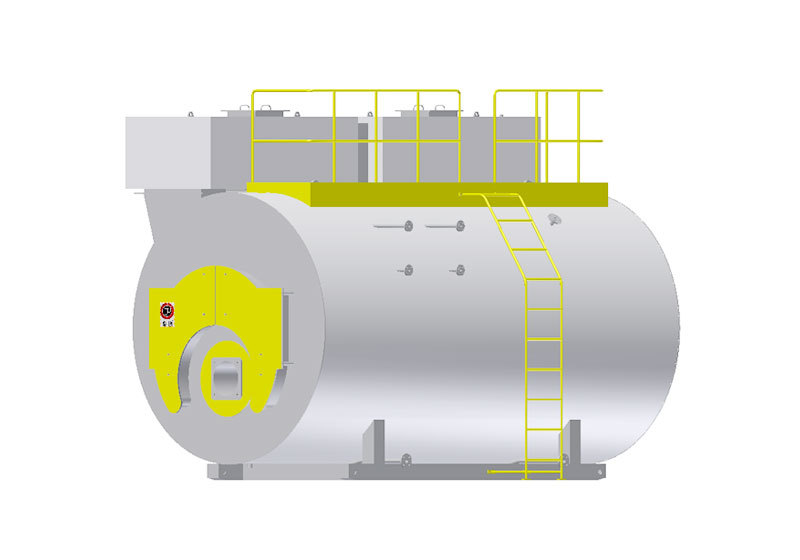
A natural gas boiler is a thermal energy conversion device that uses natural gas as fuel, burns it in the furnace to release heat, heats the water in the boiler, and vaporizes it into steam. The water in the boiler (boiler drum) is continuously heated by the energy released from the combustion of gaseous fuel in the furnace, increasing its temperature and generating pressurized steam. Because the boiling point of water increases with pressure, the boiler is sealed, and the expansion of the water vapor inside is restricted, resulting in pressure to form thermal power. Strictly speaking, the water vapor in the boiler is formed by heating saturated water in the boiler drum at a constant pressure and then vaporizing it. It is widely used as an energy source.
The natural gas boiler system configuration mainly includes the following:
1. Combustion System
Including furnace, burner, ignition device, etc.
2. Water-Steam System
Water treatment, feed water pump, steam separator, deaerator, etc.
3. Control System
Comes with the boiler control box
4. Air-Smoke System
Refers to the system composed of flue gas and air generated by combustion, mainly including blowers and chimneys.
II. Operating Procedures for Natural Gas Boilers
1. Qualified Inspection
Before operation, the natural gas boiler must pass the qualified inspection of the relevant departments. Boilers that fail the inspection are not allowed to be used.
2. Qualified Inspection of Safety Accessories
The natural gas boiler and its safety accessories must also pass the qualified inspection and be within the validity period.
3. Pre-operation Inspection
Conditions and inspection items required before the operation of a natural gas boiler:
Open the natural gas valve, check if the natural gas pressure is normal and if the filter is normal; check if the water pump is normal; check if the safety accessories are in their normal positions; good lighting facilities at the operating positions; normal operation of the deaerator; normal operation of the water softener;
4. Startup
Start the natural gas boiler, turn on the power control cabinet master switch, check if all equipment is normal, and eliminate faults; the burner enters the automatic cleaning, ignition, and other operating states; (when the pressure is raised to a certain pressure, regular blowdown should be carried out).
5. Water Quality Inspection
Boiler water control indicators: boiler water alkalinity is 6~26 mmol/L; boiler water oxygen content is less than or equal to 0.1 mg/L; feed water hardness is less than or equal to 0.3 mmol/L; boiler water PH value is between 10~12.
6. Normal Shutdown
First, turn off the operating switch; natural gas valve; wait for the pressure in the boiler drum to drop; the water level in the boiler drum is at the high water level; check if the blowdown valve is tight; close the boiler water pump valve; turn off the master switch.
7. Emergency Shutdown
If a gas boiler malfunctions and requires emergency shutdown, stop gas supply and air supply, and reduce induced draft; depending on the accident, release the gas in the furnace if necessary (prohibit pouring water into the furnace); after the fire is extinguished, close the main steam valve to isolate the main steam pipe from the steam header; after the fire is extinguished, open the furnace door and flue to cool the furnace; when the water outlet temperature drops to 70 degrees, the boiler water can be drained.
III. Energy Saving of Natural Gas Boilers
Energy saving of natural gas boilers can improve the thermal efficiency of the boiler, and the thermal efficiency of the boiler can reach 98%-106.3%. So what are the energy-saving methods for natural gas boilers?
1. Matching Demand Load with Actual Load
According to the load required by industrial production, reasonably select the rated power and number of natural gas boilers. The higher the matching degree with actual use, the smaller the flue gas loss, and the more obvious the energy-saving effect.
2. Reasonable Air-Fuel Ratio
Allowing the appropriate amount of fuel to contact the appropriate amount of air for combustion in a reasonable proportion can effectively improve the combustion efficiency of the fuel, reduce the emission of polluting gases, and effectively achieve the purpose of double energy saving.
3. Reduce Flue Gas Temperature
The thermal efficiency of commonly used boilers is generally 85%-88%, and the flue gas temperature is between 220-230 degrees. Reducing the flue gas temperature of the boiler effectively utilizes the waste heat in the flue gas; if an economizer is installed to utilize the flue gas heat energy, the flue gas temperature can be reduced to 140-150 degrees, and the thermal efficiency of the boiler can be increased to 90%-93%.
4. Increase Feed Water Temperature
By using heat exchange to utilize the heat in the continuous blowdown water, the feed water temperature of the deaerated water can be increased, thereby achieving the purpose of energy saving in the gas boiler. The condensate water in the heating system can also be reasonably recovered, and the heat of this condensate water can be recovered and reused, which is also an energy-saving method.
5. Waste Heat Recovery
Installing a boiler economizer can also save energy. The purpose of the boiler economizer is to recover waste heat from flue gas, and it is classified according to its specific use and exchange medium.
IV. Safety Distances of Natural Gas Boiler Rooms
1. Safety Distances within the Natural Gas Boiler Room
The net distance between the natural gas boiler and the inner walls of the boiler room building should provide space for the boiler operator to operate, maintain, and arrange auxiliary equipment.
1) Net distance in front of the furnace
Steam boilers 1~4t/h, hot water boilers 0.7~2.8MW, should not be less than 3.0m;
Steam boilers 6~20t/h, hot water boilers 4.2~14MW, should not be less than 4.0m;
Steam boilers 35~65t/h, hot water boilers 29~58MW, should not be less than 5.0m.
Note: When replacing boiler tubes in front of the furnace, the clearance in front of the furnace should meet the operational requirements. For steam boilers of 6~65t/h and hot water boilers of 4.2~58MW, when the furnace is equipped with an instrument control room, the net distance from the front of the boiler to the instrument control room can be set to 3m.
2) Passage clearance
Mainly refers to the passage clearance on the sides and back of the natural gas boiler
Steam boilers 1~4t/h, hot water boilers 0.7~2.8MW, should not be less than 0.8m;
Steam boilers 6~20t/h, hot water boilers 4.2~14MW, should not be less than 1.5m;
Steam boilers 35~65t/h, hot water boilers 29~58MW, should not be less than 1.8m.
In addition, when soot blowing, stoking, slag removal, installation or maintenance of spiral slag removers are required, the passage clearance should meet the operational requirements. It should also be added that the distance between the highest operating point of the boiler and the lowest structure of the boiler room roof should not be less than 2m.
2. Safety distance from the production workshop
The natural gas boiler room and the production workshop cannot be interconnected; they must be separate, generally more than 5 meters apart.
3. Safety distance from buildings
1) The safety distance between the natural gas boiler room and Class I high-rise buildings is 15 meters: Class I high-rise refers to 9-16 floors (maximum height 50 meters);
2) The safety distance between the natural gas boiler room and multi-story residential buildings is 13 meters: Multi-story buildings refer to 2-9-story residential buildings and other civil buildings with a height not exceeding 24m;
3) The safety distance between the natural gas boiler room and the annex is 10 meters: The height of the annex connected to the high-rise building generally does not exceed 24m.
Related News
What is a boiler heating surface?
The heating surface of a boiler generally refers to the metal surface area in contact with flames or flue gases (the other side is in contact with water or heat transfer oil). Heat exchange in a boiler is carried out through such a metal surface area. It is generally measured in square meters (m²). A larger heating surface area means a larger boiler capacity, and vice versa.
Boiler capacity refers to the ability of a steam boiler, hot water boiler, or organic heat carrier boiler to provide thermal energy. A larger capacity means a greater heating capacity and output; conversely, a smaller capacity means a smaller heating capacity and output. For example, a 1t/h steam boiler means that the boiler can convert 1 ton of water into saturated steam at a certain pressure within 1 hour; a 0.7 MW hot water boiler or organic heat carrier boiler means that it can generate heat equivalent to 0.7 MW of power (equivalent to the heat of 1 ton of steam) within 1 hour.
To overcome the numerous existing environmental and other shortcomings of industrial pulverized coal boilers, Junpeng Petrochemical has developed and launched a practical new type of industrial pulverized coal corner tube boiler. This product ensures stable combustion, high combustion efficiency, and reduces ash accumulation on the convective heating surface, achieving the goal of high efficiency, energy saving, and emission reduction. In the current domestic industrial pulverized coal boiler field, it is the first time to use the burner counter-arrangement technology to completely solve the problem of complete combustion, and the heating surface basically does not form slag, ensuring that the flue gas temperature remains within the design range under full load. Qingdao sheet metal processing is very common in the production of mechanical industry, and is an important part of mechanical production, with wide applications in automobiles, aerospace and other fields. It directly determines the appearance of the machine and reflects the maturity of the machine. With the rapid development of the machinery manufacturing industry, the shapes of sheet metal parts are becoming increasingly complex.

Contact Us
Sales Tel: +86-0532-58710666
Sales Tel: +86-13335063629
After-sales Tel: +86-0532-58710332
After-sales Tel: +86-13969678003
Email: qdjp-zh@163.com
Address: Qingdao High-tech Industrial Development Zone, New Materials Group
Copyright © 2025 Qingdao Junpeng Petrochemical Equipment Manufacturing Co., Ltd