

-
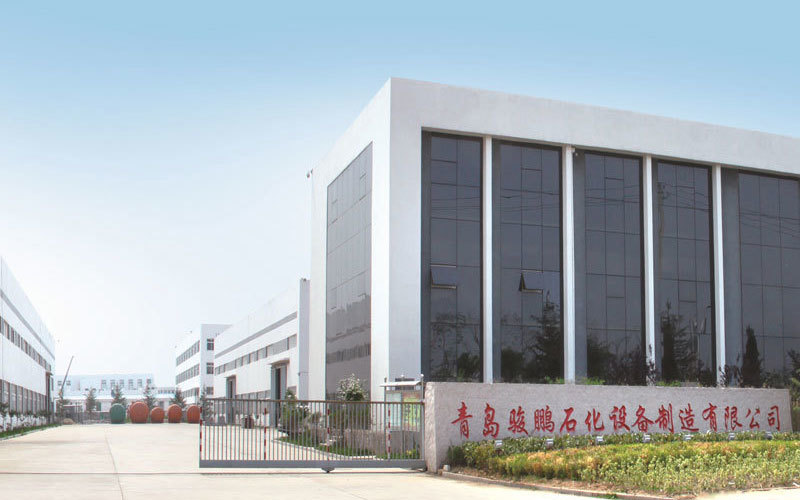
About UsQingdao Junpeng Petrochemical Equipment Manufacturing Co., Ltd. was established on February 10, 2010 with a registered capital of 51 million yuan. It is located in the beautiful tourist city of Qingdao.
-
ProductsQingdao Junpeng Petrochemical Equipment Manufacturing Co., Ltd. was established on February 10, 2010 with a registered capital of 51 million yuan. It is located in the beautiful tourist city of Qingdao.
Blog
Safety Tips: When using boilers in winter, be sure to follow the "three in place, three prohibitions" principle.
Published time:
2023-05-05 14:02
China Quality News Network: Boilers, as special equipment, play an important role in daily production and life. With the arrival of winter, the demand for steam (heat) for production and life gradually increases, and boiler usage enters its peak season. At the same time, this period is also a time when boiler accidents are prone to occur. To effectively prevent boiler accidents, boiler users are urged to strengthen boiler safety management and achieve "three in place, three eliminations".
Three in Place:
1. Equipment inspection must be in place. Special equipment managers need to understand the inspection status of boilers in use and ensure that they are within the valid inspection period. The regular inspection cycle for boilers is an external inspection once a year and an internal inspection every two years.
2. Personnel certification must be in place. General industrial boiler users need to have operators with industrial boiler stoker certificates and water treatment certificates (i.e., G1 and G3 certificates); power plant boiler users need to have power plant boiler stoker certificates (G2 certificates).
3. Safety accessories and instrument management must be in place. Boiler safety accessories and instruments mainly include safety valves, pressure gauges, water level gauges, temperature measuring devices, water level alarms, interlock protection devices, etc. Users should establish account books, conduct calibrations and inspections on time, and ensure that the safety accessories and instruments in use are safe and reliable.
Three Eliminations:
1. Eliminate violations of operation and operation. During the operation of the boiler, it is necessary to strictly follow the requirements of the operating procedures and strictly prohibit violations of operation and operation.
2. Eliminate operation with faults. When faults or abnormal situations are found during the daily operation or inspection of the boiler, emergency measures should be taken in time to prevent accidents. After a comprehensive inspection and elimination of accident hazards, it can be put back into use.
3. Eliminate the use of pressure boilers exceeding pressure and the use of atmospheric pressure boilers under pressure. Boiler users should understand the operating parameters of the boiler based on the factory data, nameplates, safety valve calibration, and inspection reports, formulate corresponding operating procedures, and ensure that the boiler is used within the specified parameters, and must not be used at overtemperature or overpressure. Users of atmospheric pressure boilers (such as bathrooms, food production, clothing, laundries, gyms, beauty salons, etc.) must ensure the non-pressure nature of the boiler system and must not block the boiler vent pipe, causing the boiler to be used under pressure.
Related News
What is a boiler heating surface?
The heating surface of a boiler generally refers to the metal surface area in contact with flames or flue gases (the other side is in contact with water or heat transfer oil). Heat exchange in a boiler is carried out through such a metal surface area. It is generally measured in square meters (m²). A larger heating surface area means a larger boiler capacity, and vice versa.
Boiler capacity refers to the ability of a steam boiler, hot water boiler, or organic heat carrier boiler to provide thermal energy. A larger capacity means a greater heating capacity and output; conversely, a smaller capacity means a smaller heating capacity and output. For example, a 1t/h steam boiler means that the boiler can convert 1 ton of water into saturated steam at a certain pressure within 1 hour; a 0.7 MW hot water boiler or organic heat carrier boiler means that it can generate heat equivalent to 0.7 MW of power (equivalent to the heat of 1 ton of steam) within 1 hour.
To overcome the numerous existing environmental and other shortcomings of industrial pulverized coal boilers, Junpeng Petrochemical has developed and launched a practical new type of industrial pulverized coal corner tube boiler. This product ensures stable combustion, high combustion efficiency, and reduces ash accumulation on the convective heating surface, achieving the goal of high efficiency, energy saving, and emission reduction. In the current domestic industrial pulverized coal boiler field, it is the first time to use the burner counter-arrangement technology to completely solve the problem of complete combustion, and the heating surface basically does not form slag, ensuring that the flue gas temperature remains within the design range under full load. Qingdao sheet metal processing is very common in the production of mechanical industry, and is an important part of mechanical production, with wide applications in automobiles, aerospace and other fields. It directly determines the appearance of the machine and reflects the maturity of the machine. With the rapid development of the machinery manufacturing industry, the shapes of sheet metal parts are becoming increasingly complex.

Contact Us
Sales Tel: +86-0532-58710666
Sales Tel: +86-13335063629
After-sales Tel: +86-0532-58710332
After-sales Tel: +86-13969678003
Email: qdjp-zh@163.com
Address: Qingdao High-tech Industrial Development Zone, New Materials Group
Copyright © 2025 Qingdao Junpeng Petrochemical Equipment Manufacturing Co., Ltd